
Jhatka – Is there a place for the Sikh method of slaughter in the UK's animal slaughter industry?
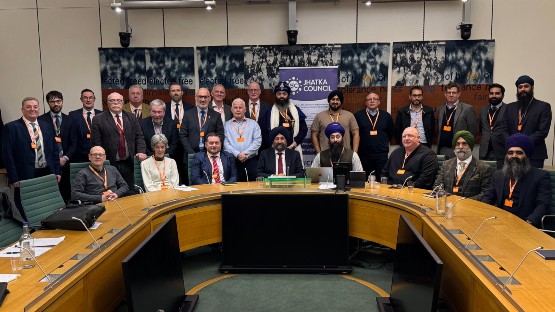
Above: Industry experts- including Peter S Jones (top/left) - assemble at Portcullis House
On 15 January 2026 I attended a parliamentary focus group at the Houses of Parliament, hosted by Gurinder Singh Josan CBE MP at the invitation of Sukhpaal Singh, General Secretary of the Jhatka Council. The meeting brought together regulators, industry specialists, animal welfare experts and members of the Sikh community to discuss the Jhatka method of slaughter and how it could be better understood and potentially incorporated within the UK’s regulated meat production systems.
Jhatka, meaning “instant” in Punjabi, refers to a single decisive act of decapitation intended to cause immediate death. In its modern commercial context, the discussion focused on a stun–kill method using a penetrative captive bolt followed by immediate decapitation. Importantly, the emphasis throughout the meeting was that any future use of Jhatka would overwhelmingly take place within properly adapted slaughterhouses, operating under existing food safety, hygiene and welfare regulations.
As a professional deer manager and wild game meat producer, my interest in this subject is practical rather than ideological. It sits directly within my area of expertise: humane dispatch, food safety, traceability and public confidence in meat.
Why I was asked to contribute
A significant part of my professional activity relates to humane killing, hygiene and regulatory compliance. I have in the past contributed to consultations and working groups with DEFRA and the Food Standards Agency (FSA) and regularly assess and train others supplying large wild game meat into the food chain. The FSA’s Wild Game Guide, updated in 2024, sets out legally binding requirements under the Food Safety Act 1990: food must be safe, hygienically handled and fully traceable. These principles underpin everything I do professionally.
Unusually, but importantly in relation to the discussion, I hold a BA (Honours) degree in Religious Studies from Brunel University and have undertaken postgraduate research into religious traditions and cultural practices. That background has shaped my understanding of how food production standards, cultural expectations and consumer confidence intersect, an issue that lies at the heart of discussions around Jhatka.
Parallels with wild game and regulated slaughter
Much of what was discussed at the focus group felt immediately familiar. In deer stalking, humane dispatch is fundamental. A well-placed shot is intended to cause rapid loss of consciousness and death, followed by careful inspection and hygienic handling. The objective being speed, certainty and minimal suffering, identical to the stated intent of Jhatka.
What differs is the setting. Whereas wild game is dispatched in the field by trained primary producers, Jhatka as proposed for commercial supply would be carried out largely within slaughterhouses adapted for that purpose. This distinction matters. It places Jhatka firmly within the same regulatory environment as other forms of slaughter, subject to inspection, training requirements, welfare monitoring, traceability and food safety controls.
The discussion around irreversible stunning, captive-bolt technology and measurable welfare outcomes reinforced that this is not about exemption from standards and how standards are applied in a way that respects religious requirements while meeting legal and regulatory expectations.
Diversity, confidence and eating more meat
One point I made to MPs was the importance of consumer confidence. Venison is sustainable, nutritious and increasingly necessary as deer populations continue to rise.
Recognising lawful religious slaughter methods such as Jhatka has the potential to broaden engagement with meat among communities who would otherwise be required to abstain. In my view, legal recognition of Jhatka could increase consumption of meat within Sikh communities thereby supporting cultural inclusion.
From a hunter’s perspective, anything that increases respect for meat and understanding of how animals are killed humanely and responsibly is a positive outcome.
A constructive discussion
The tone of the meeting was notably constructive. The Jhatka Council emphasised dialogue rather than confrontation. The Food Standards Agency clearly set out the existing legal framework and its role in enforcement. Welfare experts focused on evidence, training and auditing. Engineers and abattoir designers demonstrated how modern slaughterhouse systems could be adapted without compromising welfare, hygiene or throughput.
For me, this was an example of how policy should be developed: informed, collaborative and grounded in practical reality.
Looking ahead
I am in favour of the legalisation of Jhatka within a clear, science-based and tightly regulated framework, predominantly delivered through adapted slaughterhouses. Not because it lowers welfare standards, but because it applies them consistently while recognising the religious and cultural diversity of modern Britain.
As deer stalkers and hunters, we already operate at the intersection of tradition, ethics and regulation. If our experience can help inform wider discussions about humane slaughter, food safety and public trust, then it is right that we take part.
Whether in a woodland or a slaughterhouse, the principles remain the same: respect for the animal, respect for the law, and respect for all those that choose to eat meat.